Friday, June 22, 2012

Schizophrenic links: pessimism, optimism, more pessimism

Some interesting material from The New Scientist
  • Pessimism: Rio+20 declaration talks fail almost before they begin The title pretty much says it all. But, for the gory details of the backroom negotiations among the US, Venezuela, Canada, Russia and Japan to kill any major deal, read the story.
  • Optimism: Peak planet: Are we starting to consume less? A reasonably thorough assessment of the argument that humanity's ever-rising environmental impact is about to go into reverse. The article discusses value change and 'dematerialization' but places the greatest hope in new technologies. 
Will we grasp the nettle? The Danish agricultural economist Ester Boserup argued that throughout history, population growth and the pressure of shortages have been necessary spurs to technological developments, which seem to arrive just in time to avert the sort of disasters that exercised the likes of Malthus and Ehrlich. The signs are that we already have the know-how to live long and prosper without demanding ever more from a finite planet. The question is whether we will make the decisions to realise that promise before "just in time" becomes "just too late".
  • More Pessimism: The fixation on Boserup and the notion that "we already have the know-how to live long and prosper without demanding ever more from a finite planet" runs afoul of deeper analyses of our current condition. The Ingenuity Gap, for example, suggests that the increasing complexity and interconnectedness of our problems has created a situation where our requirement for ingenuity has outstripped our ability to supply it.

Monday, June 18, 2012

Two new World Bank reports

The past few days has seen the release of a couple of interesting World Bank reports. Yes, they have been associated with some rather misplaced policy initiatives (I'm looking at you, shock therapy!), but they do a good job of bringing together global information and, arguably, have been tarred for the sins of their twin sibling, the IMF.

The first report, Toward a Green, Clean, and Resilient World for All: A World Bank Group Environment Strategy 2012-2022, lays out the Bank's vision of global environmental policy for the next decade. The general point of the report is to underscore the connection between environmental concerns -- particularly at the global scale -- and the Bank's main mission of poverty alleviation, particularly in the developing world. To this end, they articulate the need for a 'green, clean, and resilient world' defined as follows:
  • "What do we mean by “green”? Green refers to a world in which natural resources are conserved and sustainably managed to improve livelihoods over time. It is a world in which ecosystems (both green and blue) are healthy and increase the economic returns from the activities they support—such as the fish-breeding and coastal protection services of coral reefs and the water filtering and soil protection services of forests. Other vital ecosystem services such as erosion regulation, carbon sequestration, and pest control are supported and protected. Subsoil assets are also leveraged to build other forms of wealth, such as productive and human capital. In all of this, the private sector uses natural resources sustainably as part of good business, creating jobs and contributing to long-term growth.
  • "What do we mean by “clean”? Clean refers to a low-pollution, low-carbon world. This is a world in
    which cleaner air, land, water, and oceans enable people to lead healthy, productive lives. It is also
    a world in which cleaner production standards spur innovation—whether through reducing air
    pollution, addressing legacy pollution, or encouraging recycling. It is a world in which industries are built around clean technologies— either for energy, water, transportation, or housing—providing jobs, offering the potential of export-led growth, and contributing to sustainable economic development. It is a world in which the clean technologies and production methods used by the private sector meet or even exceed international standards—partly because of management choices, but also because regulation rewards clean technologies and because clients and investors seek it. It is a world in which governments and companies are held to account by people on their clean performance.
  • “Resilient” means being prepared for shocks and adapting effectively to climate change. In a resilient
    world, countries are better prepared for more-frequent natural disasters, more-volatile weather patterns, and the long-term consequences of climate change. Healthy and well-managed ecosystems are more resilient and so play a key role in reducing vulnerability to climate change impacts. Climate resilience is integrated into urban planning and infrastructure development. Through effective social inclusion policies, countries and communities are better prepared to protect vulnerable groups and fully involve women in decision making.


The second report, What a Waste: A Global Review of Solid Waste Management, focuses on municipal waste. The world's cities currently generate around 1.3 billion tonnes of MSW a year, or 1.2kg per city-dweller per day, nearly half of which comes from OECD countries. That is predicted to rise to 2.2 billion tonnes by 2025, or 1.4kg per person. The Bank estimates China's urbanites will throw away 1.4 billion tonnes in 2025, up from 520m tonnes today. By contrast, America's urban rubbish pile will increase from 620m tonnes to 700m tonnes.

Saturday, June 16, 2012

The Heat is On at Climate Central

The folks at Climate Central are developing a real knack for catchy graphic presentations of interesting data.

First there was the fascinating Surging Seas, which interactively lets you see the danger from sea level rise and storm surge along the US coast. Now they have released, The Heat is On, an interactive map based on the average daily temperatures for the continental 48 states from 1912 to the present, and also from 1970 to the present. Along with the wealth of data on individual states, the site documents two broad trends:
  1. Warming rates accelerated everywhere after 1970
  2. The rate of warming varies dramatically from one state to another.

Thursday, June 14, 2012

So long, Lin


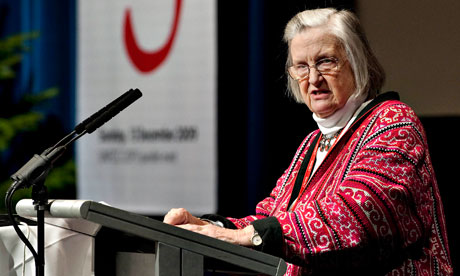
Elinor Ostrom, Nobel Prize winning economist: 7 August 1933 - 12 June 2012

Noted for her work on resource management, she was the first and (to date) only woman to win the Nobel prize for economics. She received the award, shared with Oliver E Williamson, in 2009 for her analyses of how individuals and communities can often manage common resources – ranging from irrigation and fisheries to information systems – as well or better than markets, companies or the state. Earlier this year, she appeared on Time magazine's list of the 100 most influential people in the world.

From the obituary in the Guardian
Having started her career by focusing on groundwater resources in the Los Angeles basin, then studying neighbourhood policing in Indianapolis, Lin turned her attention to the subject that gained her worldwide recognition: how the overexploitation of unowned or commonly owned resources could be averted by collective action by local users.

Her hugely influential 1990 book, Governing the Commons, examined numerous local management regimes for common resources and established a set of principles for predicting success and failure. It was this work, challenging the conventional wisdom of resource management, which the Nobel committee cited as her primary contribution to economics. But it was far from her only major contribution.

The Ostrom name will for ever be associated with two related frameworks for social-scientific analysis: the institutional analysis and design (IAD) framework and the still-evolving social-ecological systems (SES) framework. The former received its most comprehensive treatment in her 2005 book, Understanding Institutional Diversity, and has become one of the leading analytical tools in the study of public policy. While IAD focused on social rules governing resource use, the SES framework, which pays equal attention to ecological features, will be among Lin's legacies to social science. She also provided a model for breaking down disciplinary boundaries so that researchers from diverse fields could collaborate. In her 2010 book, Working Together: Collective Action, the Commons, and Multiple Methods in Practice, Lin and her co-authors offered concrete ideas to make collaboration more successful.
The New York Times obit has some interesting discussion about the way economics has internalized her work, which directly undermines a major assumption of neo-classical economics.
Professor Ostrom’s prizewinning work examined how people collaborate and organize themselves to manage common resources like forests or fisheries, even when governments are not involved. The research overturned the conventional wisdom about the need for government regulation of public resources. At least it did for the economists who knew who she was and had read her work.

“The announcement of her prize caused amazement to several economists, including some prominent colleagues, who had never even heard of her,” Avinash Dixit, a Princeton economics professor, said when introducing Professor Ostrom’s work at a luncheon in 2011. Usually, he noted, Nobel laureates need no introduction. In fact, when the Nobel recipients were announced, some economists mistakenly thought the prize had gone to Bengt Holmstrom, an economist with a similar-sounding (and, to economists, much more recognizable) name. One prominent scholar acknowledged visiting Wikipedia to figure out who exactly she was.

Surprise at Professor Ostrom’s honor, which she shared with Oliver E. Williamson, in some cases gave way to disdain and name-calling on economics blogs. “Some things said about her in blogs and other media were so ignorant and in such bad taste that I felt ashamed on behalf of the economics profession,” Mr. Dixit said.
Resilience Science has personal reflections from a number of her colleagues.

Wednesday, June 13, 2012

The intellectual heritage of deregulation

A few weeks ago I posted From O' Canada to Oh My God Canada!, a summary of the changes to Canadian environmental regulations being pushed by the current Conservative government. What I hadn't previously realized is the close intellectual connection between neo-liberal Chicago School economics a la Milton Friedman and a particular style of jurisprudence and it's market based approach to regulation. Here, from Will Success Spoil the Chicago School? is the central idea:
It wasn’t just economics that Chicago revolutionized. Across campus at the University of Chicago Law School, scholars such as Ronald Coase, George Stigler, and Richard Posner were inspired to apply economic analysis to laws and regulations, developing a field that came to be called “law and economics.” It was law and economics types who promoted the now-conventional idea that the benefits of a regulation must be weighed against its costs. Placing a dollar figure on society’s valuation of a human life went from appalling to standard.

Sunday, June 10, 2012

Rio + 20 in Nature

In the run up to the Rio+20 conference, the June 6 issue of Nature put together a fascinating set of articles assessing the current state of knowledge on the two issues that dominated the original Rio agenda: biodiversity and climate change.
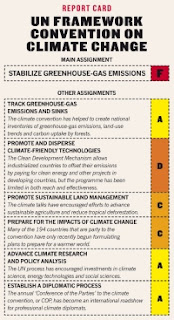
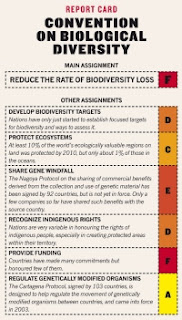

1) In "Biodiversity and its Impact on Humanity" Cardinale et.al. review current understanding about the role of biodiversity in relation to ecosystem functioning and the provision of ecosystem services. Key findings re: ecosystem functioning:
  • There is now unequivocal evidence that biodiversity loss reduces the efficiency by which ecological communities capture biologically essential resources, produce biomass, decompose and recycle biologically essential nutrients.
  • There is mounting evidence that biodiversity increases the stability of ecosystem functions through time.
  • The impact of biodiversity on any single ecosystem process is nonlinear and saturating, such that change accelerates as biodiversity loss increases.
  • Diverse communities are more productive because they contain key species that have a large influence on productivity, and differences in functional traits among organisms increase total resource capture.
  • Loss of diversity across trophic levels has the potential to influence ecosystem functions even more strongly than diversity loss within trophic levels.
  • Functional traits of organisms have large impacts on the magnitude of ecosystem functions, which give rise to a wide range of plausible impacts of extinction on ecosystem function.
  • The impacts of diversity loss on ecological processes might be sufficiently large to rival the impacts of many other global drivers of environmental change.
  • Diversity effects grow stronger with time, and may increase at larger spatial scales.
  • Maintaining multiple ecosystem processes at multiple places and times requires higher levels of biodiversity than does a single process at a single place and time.
  • The ecological consequences of biodiversity loss can be predicted from evolutionary history.
The findings re: ecosystem services were more tentative:
  • There is now sufficient evidence that biodiversity per se either directly influences (experimental evidence) or is strongly correlated with (observational evidence) certain provisioning and regulating services.... For provisioning services, data show that (1) intraspecific genetic diversity increases the yield of commercial crops; (2) tree species diversity enhances production of wood in plantations;
    (3) plant species diversity in grasslands enhances the production of fodder; and (4) increasing diversity of fish is associated with greater stability of fisheries yields. For regulating processes and services, (1) increasing plant biodiversity increases resistance to invasion by exotic plants; (2) plant pathogens, such as fungal and viral infections, are less prevalent in more diverse plant communities; (3) plant species diversity increases above ground carbon sequestration through enhanced biomass
    production (but see statement 2 concerning long-term carbon storage); and (4) nutrient mineralization and soil organic matter increase with plant richness.
  • For many of the ecosystem services reviewed, the evidence for effects of biodiversity is mixed, and the contribution of biodiversity per se to the service is less well defined.
  • For many services, there are insufficient data to evaluate the relationship between biodiversity and the service.
  • For a small number of ecosystem services, current evidence for the impact of biodiversity runs counter to expectations.
2) In "A global synthesis reveals biodiversity loss as a major driver of ecosystem change" Hooper, et. al. summarize evidence showing that extinctions are altering key processes important to the productivity and sustainability of Earth’s ecosystems

3) In "Approaching a state shift in Earth’s biosphere" Barnosky et. al. review the basics of state shift theory, review the evidence relating to past planetary-scale critical transitions and state shifts, and examine research related to a number of contemporary global-scale forcing mechanisms: human population growth with attendant resource consumption, habitat transformation and fragmentation, energy production and consumption, and climate change.

4) The political/policy pieces -- documenting how poorly nations have done in realizing their 1992 promises and describing developments that hold out the potential for a more optimistic future -- are worth checking out as well, but they are significantly less interesting than the articles summarizing current scientific knowledge.

Saturday, June 9, 2012

Bill Rees on Growth Resilience and Ecological Decline

This fifteen minute interview with Canadian ecologist Bill Rees sums it all up with regard to energy, ecology, and civilization. He mostly talks about the cultural mythology of growth and how that must be replaced with another story about adapting to limits. What's especially enlightening is his view of 'resilience', which he calls a 'double-edge sword.' The amazing human capacity for adaptation and resilience as a response to numerous ecological challenges is exactly what got us to this point in global civilization; but our capacity for resilience may also prevent us from successfully scaling the largest challenge we face: a civilization that is in perpetual decline due to a loss of energy sources, and climate change that challenges the food supply.

http://www.energybulletin.net/media/2012-06-09/bill-rees-why-were-denial


[ Bill Rees // Why We're in Denial ] from Extraenvironmentalist on Vimeo.


Saturday, June 2, 2012

Risks times two

Two quick takes:

1) Here's the brief for the 2012 edition of the World Economic Forum assessment of Global Risks:
Economic imbalances and social inequality risk reversing the gains of globalization, warns the World Economic Forum in its report Global Risks 2012. These are the findings of a survey of 469 experts and industry leaders, indicating a shift of concern from environmental risks to socioeconomic risks compared to a year ago. Respondents worry that further economic shocks and social upheaval could roll back the progress globalization has brought, and feel that the world’s institutions are ill-equipped to cope with today’s interconnected, rapidly evolving risks. The findings of the survey fed into an analysis of three major risk cases: Seeds of Dystopia; Unsafe Safeguards and the Dark Side of Connectivity. The report analyses the top 10 risks in five categories - economic, environmental, geopolitical, societal and technological - and also highlights "X Factor" risks, the wild card threats which warrant more research, including a volcanic winter, cyber neotribalism and epigenetics, the risk that the way we live could have harmful, inheritable effects on our genes. Key crisis management lessons from Japan’s earthquake, tsunami and nuclear disasters are highlighted in a special chapter.
The report covers environmental, societal, geopolitical, technological and economic risks. While the coverage of environmental risks isn't a fulsome as I'd like and, as one might expect from this bunch, there is an ongoing love affair with economic globalization, the report does display an interesting awareness of the interconnection among risks (see figure below).  Indeed, there is a case study focusing on the dark side of connectedness.


The world's air has reached what scientists call a troubling new milestone for carbon dioxide, the main global warming pollutant. Monitoring stations across the Arctic this spring are measuring more than 400 parts per million of the heat-trapping gas in the atmosphere. The number isn't quite a surprise, because it's been rising at an accelerating pace. Years ago, it passed the 350ppm mark that many scientists say is the highest safe level for carbon dioxide. It now stands globally at 395.

Tuesday, May 29, 2012

Photo Art and the Environment: Take 3 -- Fracking


For those who are tiring of posts on this theme -- take heart, it's only a link. For those who want more, Andrew Revkin has an interesting discussion of 'Fracked' photos with links to a variety of interesting projects.

Saturday, May 26, 2012

Photographic Art and the Food System: Take 2

German photographer Michael Schmidt, like Dutch designer Mediemsta who was profiled in the previous post, spends several years on a single project. Schmidt is best known for Waffenruhe (Ceasefire), a study of Berlin immediately before the fall of the Wall, which is widely considered one of the greatest contemporary photobooks. 

Schmidt's latest obsession is the mechanized, industrialized food system of contemporary Western culture.  The project has resulted in a book, Lebensmittel (Food), and is currently being exhibited in Europe.


Using his trademark style combining social documentary and urban topographics, he explores the fascinating topic of how we feed ourselves, from the farm to the table (or the fast-food restaurant).


 Here is what Artforum has to say about the associated exhibition:
With his current exhibition, “Lebensmittel” (Food), which consists of 177 photographs, Berlin-based photographer Michael Schmidt debuts the results of his research into agribusiness, which between 2006 and 2010 took him to many different locations throughout Europe. Schmidt sought out places where edibles are produced, packaged, distributed, and sold. Yet the specific locations are never revealed, neither in the exhibition nor in the accompanying catalogue. Thus the mostly uninhabited cultivated fields and plantations, the motifs of fish, pig, and cattle breeding, of large-scale bakeries as well as supermarkets, appear to be anonymous and exchangeable: everywhere and nowhere.

Schmidt’s interest in a nonspecifity of place should come as no surprise. He is known not for single images but for vastly conceived series, as in the case of “EIN-HEIT” (Unity), 1991–94; “Waffenruhe” (Ceasefire), 1985–87; and “Irgendwo” (Somewhere), 2001–2004. In the present show, which can be seen in Innsbruck this summer and in Berlin next spring, it is precisely a multitude of images that Schmidt pursues. Within the series, an image forms of the maximally rationalized production of edible goods.

There are nonetheless two narrative lines to be read: On the one hand, the observer is confronted with technical equipment which one only recognizes after a closer look as a fish farm or mussel bank. One sees sheer endlessness: one part of a stripped field, fenced-in production facilities that reveal nothing as to what will be processed there. Other shots reveal the subject under investigation at close range: broken eggs behind glass, shrink-wrapped and labeled beef, swollen udders with milk stools set at the ready, greased griddles from which tumble french fries, a great green apple in front of Styrofoam. In this time of food scandals, one might suspect these photographs to be a means of agitation. But this is clearly not Schmidt’s intention. “Lebensmittel,” in all its clarity, comes across instead as the cool image-record of a complex system on the brink of collapse.

The following video, even if you don't speak German, provides a wider look at the images and, more significantly, illustrates the comparative power of the exhibition relative to the presentation of the same images in book form.